
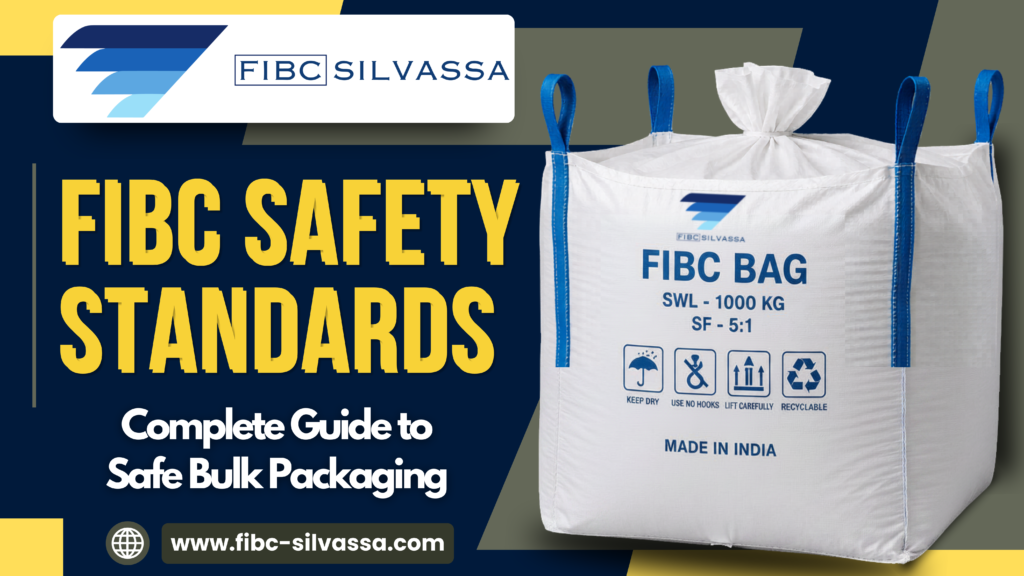
Flexible Intermediate Bulk Containers (FIBC), commonly known as jumbo bags or bulk bags, are widely used for transporting and storing dry bulk materials across industries. Since these bags handle heavy loads and industrial materials, maintaining proper FIBC Safety Standards is extremely important. These standards help ensure safe transportation, reliable performance, workplace safety, and product protection.
Today, industries such as agriculture, chemicals, construction, food processing, pharmaceuticals, and mining rely heavily on FIBC bags. Therefore, manufacturers must follow strict international safety standards during production and testing.
What Are FIBC Safety Standards?
FIBC Safety Standards refer to the guidelines, testing procedures, and quality requirements followed during the manufacturing and usage of FIBC bags. These standards are designed to ensure that the bags can safely handle specified loads without tearing, collapsing, or causing accidents during transportation and storage.
In addition, these safety standards help businesses comply with industrial regulations and improve operational efficiency.
Importance of FIBC Safety Standards
Following proper FIBC safety standards offers several important advantages:
- Ensures safe handling of heavy materials
- Reduces workplace accidents and product damage
- Improves durability and bag performance
- Supports international transportation compliance
- Enhances customer confidence and reliability
- Minimizes material wastage and contamination
As a result, companies can maintain smooth operations while protecting both workers and products.
Key FIBC Safety Parameters
1. Safe Working Load (SWL) FIBC Safety Standards bag
Safe Working Load (SWL) refers to the maximum weight an FIBC bag can safely carry. Therefore, selecting the appropriate SWL is essential for safe handling and transportation. Common SWL capacities include:
- 500 kg
- 1000 kg
- 1500 kg
- 2000 kg
Manufacturers clearly mention the SWL on the bag label to prevent overloading.
2. Safety Factor (SF)
The Safety Factor defines how much stress a bag can tolerate compared to its Safe Working Load.
Common safety factors include:
- 5:1 for single-trip bags
- 6:1 for multi-trip bags
For example, a 1000 kg bag with a 5:1 safety factor must withstand 5000 kg during testing.
3. Top and Bottom Design Strength
The lifting loops, stitching, and discharge spouts must be strong enough to support the bag during filling, lifting, transportation, and unloading.
Popular FIBC designs include:
- U-Panel Bags
- Circular Bags
- Baffle Bags
- 4-Panel Bags
Each design undergoes performance testing to ensure safety and stability.
International FIBC Safety Standards
ISO Standards
The International Organization for Standardization (ISO) defines several guidelines related to FIBC manufacturing and testing. As a result, these ISO standards help ensure consistency, durability, and safety across global markets.
UN Certification for Hazardous Materials
UN-certified FIBC bags are specially designed for transporting hazardous chemicals and dangerous goods. Furthermore, manufacturers subject these bags to rigorous testing procedures, including:
- Top lift testing
- Tear resistance testing
- Drop testing
- Compression testing
- Vibration testing
Therefore, UN-certified bags are essential for industries handling hazardous products.
Food Grade FIBC Safety Standards
Food-grade FIBC bags must comply with strict hygiene and contamination-control standards. In addition, these bags are manufactured in clean environments using food-safe polypropylene materials to ensure maximum product safety and quality.
Industries using food-grade FIBCs include:
- Sugar
- Flour
- Rice
- Spices
- Starch
- Animal feed
Common FIBC Testing Methods
Moreover, manufacturers conduct several quality tests to verify compliance with FIBC Safety Standards.
Top Lift Test
This test checks whether the lifting loops can safely handle the maximum load.
Drop Test
The bag is dropped from a specific height to verify impact resistance during transportation.
Compression Test
This test evaluates stacking strength during warehouse storage.
Tear Resistance Test
Manufacturers test the fabric and stitching to ensure strong tearing resistance under pressure.
UV Resistance Test
UV stabilizers are tested to ensure the bag can withstand sunlight exposure during outdoor storage.
Safe Handling Practices for FIBC Bags
Even high-quality bags require proper handling procedures. Therefore, businesses should follow these important safety practices to ensure maximum safety and durability:
- Never exceed the recommended SWL
- Use proper lifting equipment
- Avoid dragging bags on rough surfaces
- Store bags in dry and clean areas
- Inspect loops and stitching before use
- Follow correct stacking guidelines
- Protect bags from sharp objects
By following these guidelines, companies can significantly improve workplace safety and bag lifespan.
Different Types of FIBC Safety Standards Bags
Type A FIBC Bags
These are standard polypropylene bags used for non-flammable products. In general, Type A FIBC bags are suitable for transporting materials that do not generate hazardous static electricity. Moreover, they are widely used in industries where there is no risk of flammable gases or combustible dust ignition.
Type B FIBC Bags
These bags reduce brush discharge and are suitable for dry, flammable powders. In addition, Type B FIBC bags are designed using low breakdown voltage fabric to minimize the risk of dangerous sparks. Therefore, they are commonly used in industries handling combustible powdered materials.
Type C Conductive FIBC Bags
Type C FIBC bags are manufactured using conductive threads that are connected to grounding systems during filling and discharge operations. As a result, these bags help prevent dangerous electrostatic discharge in hazardous environments.
Type D Anti-Static FIBC Bags
Unlike Type C bags, Type D FIBC bags safely dissipate static electricity without requiring any grounding connection. Therefore, they are widely used for handling flammable powders and combustible materials safely.
Industries handling flammable powders or chemicals often prefer Type C and Type D FIBC bags for enhanced safety. In addition, these bags help minimize the risk of electrostatic discharge during filling and unloading operations. As a result, they are widely used in chemical, pharmaceutical, and hazardous material packaging industries.
Industries That Require Strict FIBC Safety Compliance
Several industries require high-level FIBC safety compliance, including:
- Chemical Industry
- Food Processing Industry
- Agriculture Industry
- Construction Industry
- Pharmaceutical Industry
- Mining Industry
- Fertilizer Industry
In these sectors, safety and contamination prevention are critical. Therefore, industries must follow strict packaging and handling standards to maintain product quality and workplace safety. In addition, using certified FIBC bags helps minimize operational risks and ensures reliable bulk material transportation.
How to Choose Safe and Certified FIBC Bags
When selecting FIBC bags, businesses should consider:
- Certified manufacturing standards
- Correct SWL and Safety Factor
- Product compatibility
- UV protection requirements
- Food-grade certification if needed
- Anti-static protection for hazardous materials
- Reliable stitching and loop quality
Choosing the right FIBC bag helps reduce operational risks and improves packaging efficiency. In addition, selecting certified and high-quality bags ensures better product protection during storage and transportation. As a result, businesses can improve workplace safety, reduce material loss, and achieve more reliable bulk packaging operations.
Conclusion
FIBC Safety Standards play a vital role in ensuring safe storage, transportation, and handling of bulk materials across multiple industries. In addition, factors such as load testing, safety ratings, UN certifications, and anti-static protection ensure that every FIBC bag meets strict quality and safety requirements. As a result, properly tested and certified FIBC bags not only improve operational safety but also help reduce product loss and workplace hazards.
At FIBC SILVASSA, we manufacture high-quality FIBC bags that meet international safety standards and industrial packaging requirements. Moreover, we design our durable and reliable jumbo bags to provide maximum safety, strength, and performance for various industrial applications. Therefore, businesses across multiple industries trust our packaging solutions for safe and efficient bulk material handling.