
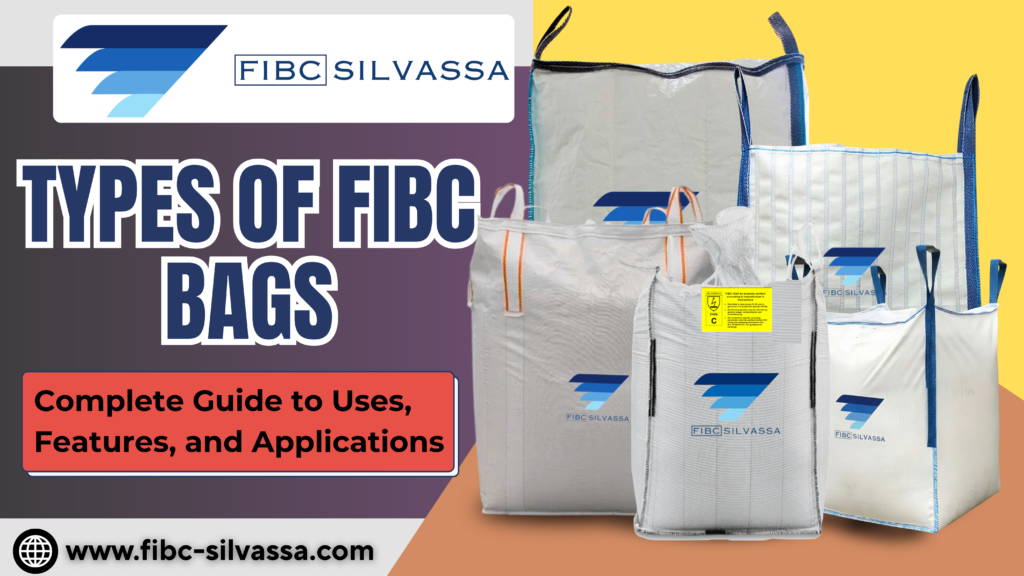
FIBC bags, also known as Flexible Intermediate Bulk Containers or jumbo bags, are among the most widely used bulk packaging solutions across various industries. The different types of FIBC bags help businesses store, transport, and handle bulk materials safely and efficiently. Moreover, these bags offer excellent strength, durability, and cost-effectiveness, making them a preferred choice for industries such as agriculture, chemicals, food processing, pharmaceuticals, mining, and construction.
However, not every bulk bag serves the same purpose. While some designs are suitable for general industrial applications, others provide specialized features such as static protection, food-grade compliance, or enhanced storage efficiency. Therefore, understanding the available options is essential when selecting the right packaging solution. In this guide, we will explore the most common types of FIBC bags, their key features, and their industrial applications.
What Are FIBC Bags?
FIBC stands for Flexible Intermediate Bulk Container. These large woven polypropylene bags are specifically designed for storing and transporting dry, flowable materials in bulk quantities. Furthermore, they are capable of carrying loads ranging from 500 kg to over 2,000 kg, depending on their construction and Safe Working Load (SWL).
Because of their lightweight design and high strength, different types of FIBC bags help businesses reduce packaging costs while improving operational efficiency. In addition, they can be customized with various filling and discharge options to suit different industrial requirements.
Why FIBC Bags Are Widely Used
Many industries choose different types of FIBC bags because they provide several operational advantages. For example, they simplify bulk handling, reduce labor requirements, and maximize storage space. Additionally, they are easy to transport using forklifts and cranes.
Some key benefits include:
- High load-bearing capacity
- Cost-effective packaging
- Easy storage and transportation
- Customizable designs
- Reusable and recyclable options
- Improved supply chain efficiency
As a result, different types of FIBC bags have become an essential component of modern industrial packaging.
Types of FIBC Bags
U-Panel FIBC Bags
Among the most common types of FIBC bags, U-Panel bags are widely used for transporting and storing heavy bulk materials.
Features
- Excellent strength and durability
- High load capacity
- Cost-effective construction
- Suitable for heavy materials
Applications
- Fertilizers
- Chemicals
- Agricultural products
- Minerals
Consequently, U-Panel bags are ideal for general-purpose bulk packaging applications.
Circular FIBC Bags
Circular bags are another popular option among the various FIBC bag types available for industrial packaging applications.
Features
- Seamless body construction
- Lightweight design
- Reduced leakage risk
- Improved strength
Applications
- Food ingredients
- Chemical powders
- Plastic granules
- Fine materials
Furthermore, circular bags are often preferred for products that require better containment.
Four-Panel FIBC Bags
Four-Panel bags are preferred bulk bag designs for businesses that require better shape retention and stacking performance.
Features
- Better shape retention
- Improved stacking capability
- Efficient warehouse storage
- Enhanced stability
Applications
- Animal feed
- Seeds
- Plastic resins
- Industrial powders
Moreover, these bags help maximize storage and transportation efficiency.
Baffle FIBC Bags
When companies need maximum storage efficiency, these jumbo bag variants provide an excellent solution.
Features
- Improved pallet utilization
- Better container efficiency
- Reduced bulging
- Enhanced stacking stability
Applications
- Food products
- Pharmaceutical ingredients
- Specialty chemicals
- Export packaging
In addition, baffle bags allow businesses to utilize shipping and warehouse space more effectively.
Type C Conductive FIBC Bags
Among the specialized industrial bulk bags, Type C bags are designed for environments where static electricity can create safety risks.
Features
- Prevents static electricity buildup
- Suitable for flammable environments
- Enhanced workplace safety
- Regulatory compliance
Applications
- Petrochemical products
- Flammable powders
- Chemical processing
- Hazardous materials
Therefore, Type C bags are widely used in industries where electrostatic discharge presents a risk.
Type D Static Dissipative FIBC Bags
Type D bags represent one of the safest FIBC packaging solutions for handling combustible powders without grounding requirements.
Features
- No grounding required
- Easy operation
- Reliable static protection
- Improved safety
Applications
- Powder handling
- Chemical industries
- Hazardous environments
- Industrial manufacturing
Consequently, Type D bags provide a convenient solution for operations involving combustible dust.
Food Grade FIBC Bags
Food-grade containers are specialized bulk packaging bags manufactured for the safe transportation and storage of food products.
Features
- High cleanliness standards
- Contamination prevention
- Food-safe materials
- Consistent quality
Applications
- Sugar
- Rice
- Flour
- Food additives
As a result, food manufacturers depend on these bags for safe bulk transportation and storage.
Ventilated FIBC Bags
These agricultural FIBC bag designs allow continuous airflow, helping maintain product freshness during storage and transportation.
Features
- Improved airflow
- Reduced moisture buildup
- Enhanced product freshness
- Durable construction
Applications
- Potatoes
- Onions
- Firewood
- Agricultural produce
Additionally, these bags help preserve product quality during storage and transportation.
UN-Certified Bags
Among the regulated types of bulk bags, UN-certified bags meet strict international standards for transporting hazardous materials.
Features
- Compliance with international regulations
- High durability
- Reliable performance
- Enhanced safety
Applications
- Hazardous chemicals
- Industrial waste
- Dangerous powders
- Regulated materials
Therefore, these bags are essential for businesses that transport dangerous goods.
How to Choose the Right FIBC Bag
With numerous types of FIBC bags available, selecting the right option requires careful evaluation of material characteristics, handling conditions, and compliance requirements. Additionally, evaluate storage environments, transportation methods, and regulatory requirements.
Businesses should also consider whether they require food-grade certification, static protection, ventilation, or UN compliance. By assessing these factors carefully, companies can choose the most suitable packaging solution for their specific application.
Benefits of Using Different Types of FIBC Bags
The various FIBC bag designs available today help businesses improve storage efficiency, transportation safety, and overall supply chain performance.
Major Benefits
- High carrying capacity
- Reduced packaging expenses
- Efficient storage utilization
- Easy mechanical handling
- Reusable and recyclable options
- Customizable designs
- Enhanced product protection
- Improved logistics efficiency
Furthermore, these benefits help businesses streamline their supply chains while maintaining product quality and safety.
Conclusion
Understanding the various types of FIBC bags is essential for selecting the right bulk packaging solution. While U-Panel, Circular, and Four-Panel bags are ideal for general industrial applications, specialized options such as Baffle, Type C, Type D, Food Grade, Ventilated, and UN-Certified bags meet specific safety, storage, and transportation requirements.
Therefore, choosing the appropriate type of FIBC bag can improve operational efficiency, enhance workplace safety, reduce transportation costs, and protect valuable products throughout the supply chain. At FIBC SILVASSA, we manufacture premium-quality FIBC jumbo bags designed to meet the diverse needs of industries worldwide. Our commitment to quality, innovation, and international standards ensures reliable and durable packaging solutions for every application.