
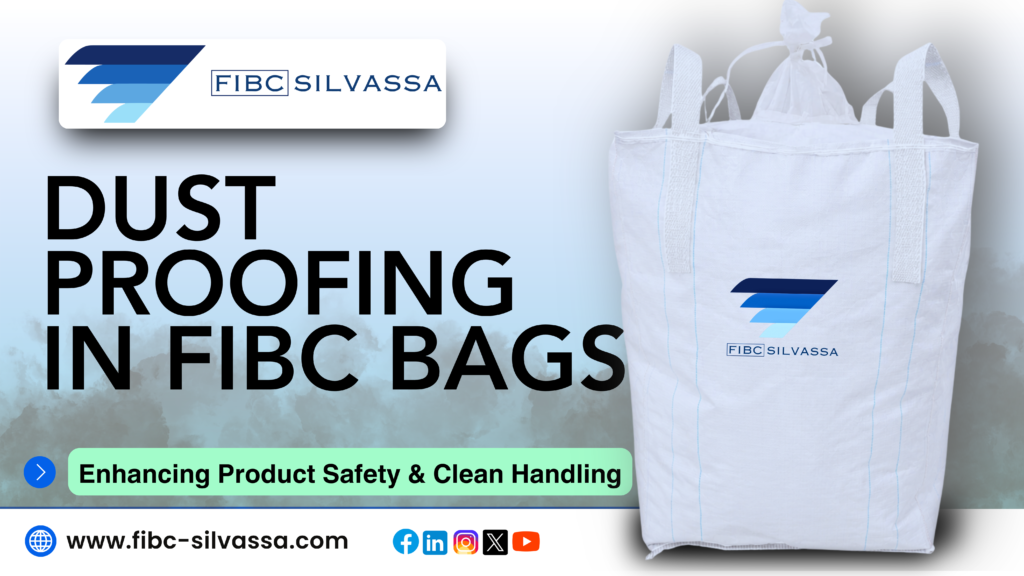
Dust Proofing in FIBC Bags: Enhancing Product Safety & Clean Handling
In modern industries, handling fine powders without dust leakage is a real challenge. However, even small amounts of escaping dust can lead to contamination, product loss, and safety concerns. Therefore, businesses are increasingly focusing on dust proofing in FIBC bags to maintain clean and efficient operations.
In addition, dust-free handling not only protects the product but also creates a safer working environment. This makes dust-proof bulk bags a smart and necessary investment.
What is Dust Proofing in FIBC Bags and Why It Matters
Dust proofing in FIBC bags refers to specialized design techniques that prevent fine particles from escaping through seams, fabric, or discharge points. In other words, it ensures that the material remains securely inside the bag during storage and transportation.
For example, industries dealing with cement, flour, and chemicals rely heavily on dust-proof solutions. As a result, they can reduce contamination risks and improve overall efficiency.
Key Techniques in FIBC Bags
1. Seam Sealing in Dust Proof FIBC Bags
Firstly, seam sealing plays a critical role in preventing leakage. Traditional stitching creates micro holes; however, techniques like felt sealing and seam taping effectively close these gaps.
Consequently, the bag becomes significantly more dust-resistant.
2. Coated Fabric for FIBC Dust Control
Secondly, coated or laminated polypropylene fabric reduces air permeability. Moreover, it adds strength and durability to the bag.
Because of this, coated FIBC bags are widely used for fine powder handling.
3. Liner Integration for Bulk Bag Dust Protection
Another effective method is using inner liners such as PE liners. In fact, liners act as a secondary barrier against dust leakage.
Additionally, they are ideal for food-grade and pharmaceutical applications where hygiene is critical.
4. Controlled Filling & Discharge Systems
Finally, dust control during filling and discharge is equally important. Therefore, modern FIBC bags include spouts, tie cords, and iris closures.
As a result, dust emissions are minimized during operation.
Benefits of Dust Proofing in FIBC Bags
Improved Product Safety
Dust proofing prevents contamination and material loss. Thus, product quality remains intact.
Enhanced Workplace Safety
Less airborne dust means healthier working conditions. Furthermore, it reduces respiratory hazards for workers.
Regulatory Compliance
Dust-proof bags meet strict standards for industries like food and pharma. Hence, compliance becomes easier.
Better Operational Efficiency
Cleaner handling reduces wastage and cleanup time. Ultimately, this improves productivity.
Applications of Dust Proof FIBC Bags Across Industries
Dust proof FIBC bags are used in various industries. For instance:
- Chemical and pharmaceutical powders
- Cement and construction materials
- Food ingredients like flour and sugar
- Agricultural and mineral products
Similarly, any industry dealing with fine particles can benefit from these solutions.
Conclusion:
To sum up, dust proofing in FIBC bags is crucial for safe and efficient bulk handling. Not only does it protect the product, but it also ensures cleaner operations and better compliance with industry standards.
In the long run, investing in dust-proof solutions leads to improved performance, reduced material loss, and higher operational efficiency. Therefore, choosing a reliable solution provider becomes equally important. This is where FIBC SILVASSA stands out by delivering high-quality, dust-proof bulk bags designed for maximum safety, durability, and clean handling across industries.